
Industry-leading software suites used in satellite communications and radio frequency (RF) engineering.
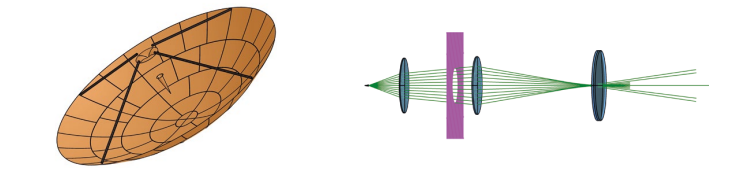
GRASP is a dedicated software package for reflector systems, and as such it offers fast and accurate analysis and design optimisation of even the most advanced reflector antenna systems. The efficient Physical Optics (PO) algorithm that GRASP is based on enables users to predict the entire pattern from very large antennas in a matter of seconds. Ray methods are also available as an alternative and may be used to visualise scattering paths.
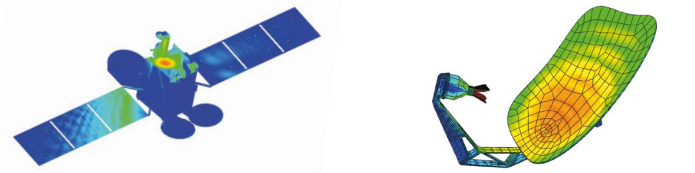
ESTEAM is the tool for solving electromagnetic scattering and radiation problems of general nature involving conducting as well as dielectric materials. Detailed models of, for example, microstrip and helix antennas can be analysed and optimised, and ESTEAM particularly excels for modelling electrically large antennas and platforms. ESTEAM also allows calculation of monostatic Radar Cross Section (RCS)*.
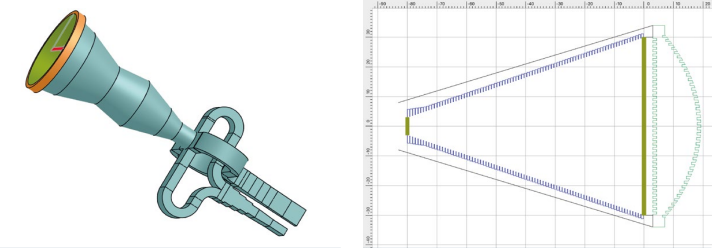
CHAMP 3D the user can build a complex 3D or rotationally symmetrical waveguide assembly or feed by selecting from a library of predefined components or load the assembly/component from a CAD file. Scattering parameters and radiation from feeds excited by arbitrary waveguide modes or any combination hereof can be calculated.
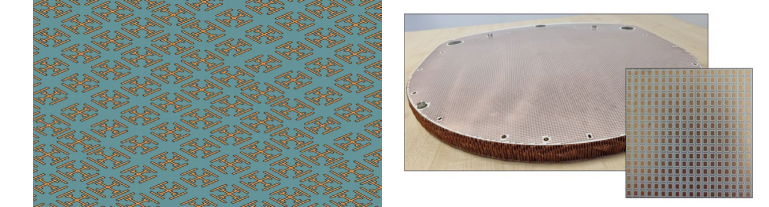
QUPES is a dedicated software tool for analysis and design of quasiperiodic surfaces such as reflectarrays, frequency selective surfaces (FSS), and transmitarrays. Starting from the definition and design of the unit-cell geometry to the optimisation of the entire finite-sized structure, QUPES provides the needed capabilities to design a periodic/quasi-periodic surface in a single tool.
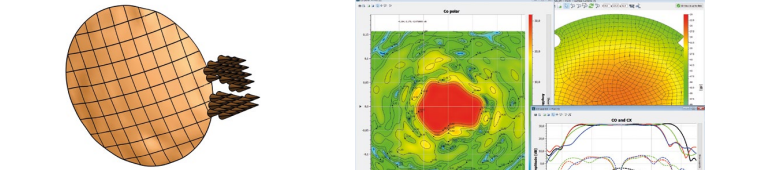
POS enables the design of antennas for advanced payloads, such as reflectors for contoured beams, arrayfed reflectors for High-Throughput Satellites (HTS), or reconfigurable direct-radiating arrays. POS has been relied upon by the global satellite industry for decades and is recognised as the de-facto standard for shaped reflector design. The software is also widely used for defining and optimising arrays and array-fed reflectors.
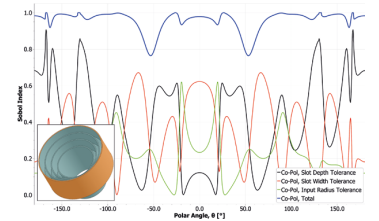
With the Uncertainty Quantification (UQ) product, the antenna designer may augment the usual antenna design process with uncertainties on design parameters and get data on the expected antenna performance and confidence intervals.
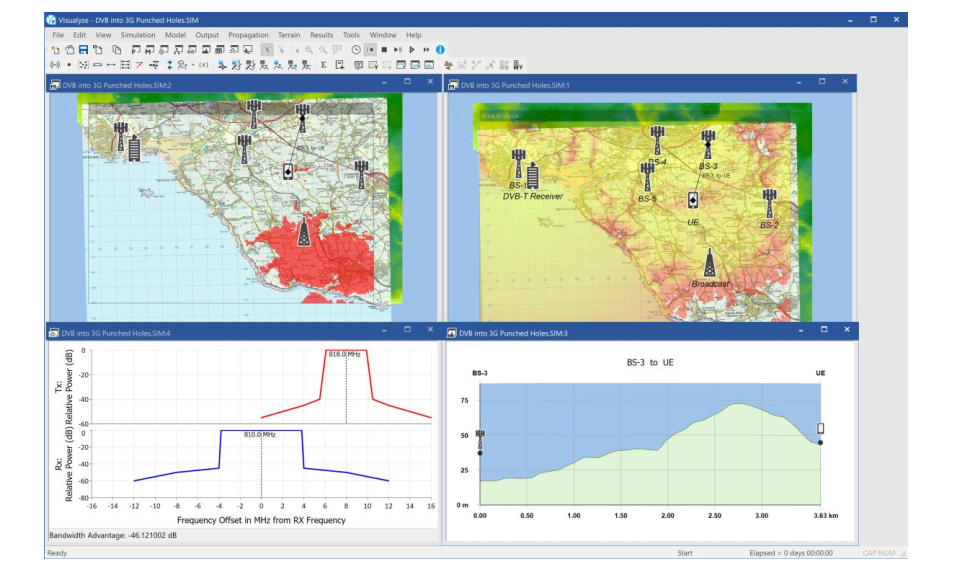
Visualyse Professional can be applied to studies and simulations of satellite systems and terrestrial networks of all kinds and across all frequency bands. As a tool for studying ‘What If’ scenarios it has no peers. Whether your satellites are GSO, non-GSO, HEO or in any other type of earth orbit, Visualyse can model their behaviour. Terrestrial fixed links, mobiles stations and cellular networks can be defined and analysed.
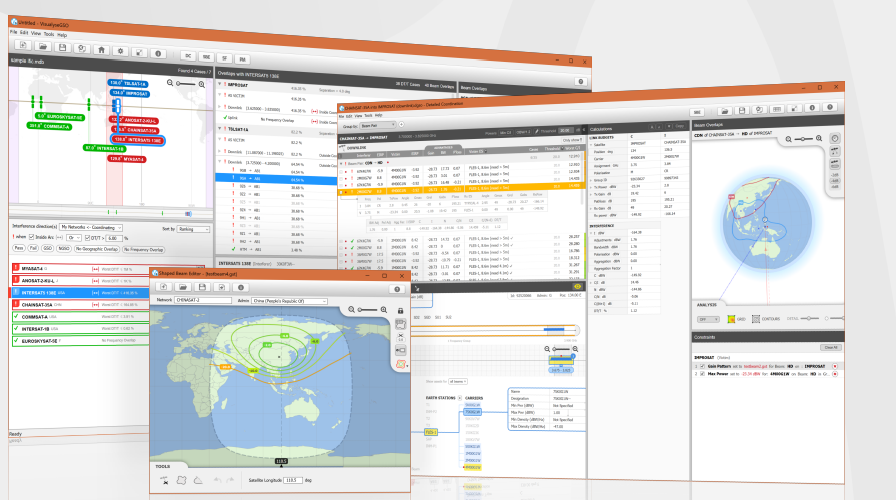
Visualyse GSO V3 can checks frequency overlaps, orbital separation, and priority dates. It performs coordination trigger analysis based on DT/T levels and coordination arcs and will also perform detailed interference analysis for any system you select from those identified in the database.
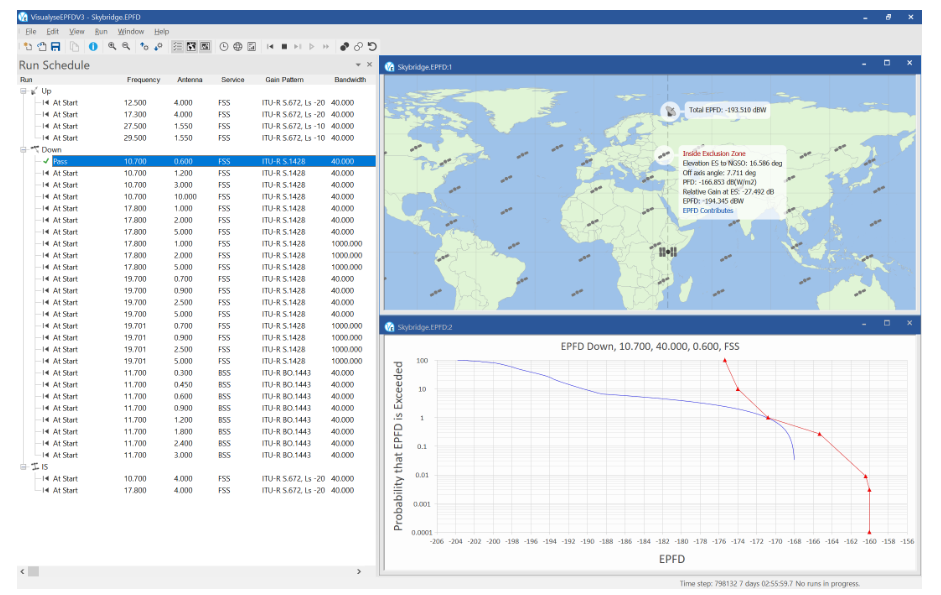
calculate the aggregate interference from multiple non-geostationary (non-GSO) satellite systems on a specific geostationary (GSO) satellite receiver, ensuring protection from harmful interference as defined by International Telecommunication Union (ITU) regulations (Article 22.5C.1)